

A one-legged balance with an optional forward extension of the lifted leg.
Level: Intermediate · Category: Standing balance · Support: See modifications below.
How to practice Hand-to-Big-Toe Pose
1. Begin in Mountain Pose beside a wall or sturdy chair.
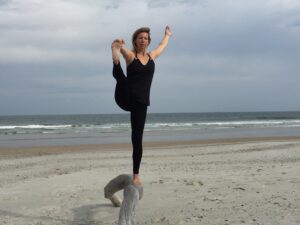
2. Shift onto your left foot and lift the right knee a little. Hold behind the thigh or around the shin.
3. Remain here, or use a strap around the foot to explore a small forward extension.
4. Keep a bend in the lifted knee when needed. Stay tall without pulling the foot upward or leaning far back.
5. Lower the foot gently and repeat on the other side.
Breathing
Keep the breath smooth and unforced. Let an inhale create a sense of length and use the exhale to soften unnecessary effort. Shorten the hold or choose more support if breathing becomes strained.
Modifications and support
Keep the knee bent, hold support, or rest the lifted heel on a stable low surface. A toe grip is optional.
Common alignment habits to notice
Avoid locking the standing knee, rounding the back to reach the foot, or lifting the leg higher than your balance allows.
Benefits
demonstration, variation 2″ width=”300″ height=”225″ /> To enter Utthita Hasta Padangusthasana | Hand to Big Toe Pose: 1. Begin in Tadasana (Mountain Pose) at the front of your mat. Root down through your standing foot and find a soft, steady gaze on a point in front of you. 2. Lift one knee toward your chest, holding the shin gently with both hands. Engage your standing leg and activate your core. It is often helpful to seek a specific spot opposite you to stare at when performing a balance posture. 3. When steady, reach your index and middle fingers to wrap around your big toe, extending the leg slowly forward. A bend in the knee is perfectly okay — honor your body’s edge. Hold this balance for 6 – 12 breaths and repeat on the other side. For an added challenge, once your leg is extended, open the lifted leg outward to the side, rotating from the hip. Keep your shoulders level and gaze soft. Physical Benefits:
Strengthens legs, thighs, knees, ankles, and abdominal muscles
Improves balance and postural alignment
Stretches hamstrings and calves
Stimulates digestive organs
Opens hips (in side extension variation)
Promotes circulation and joint mobility
Energetic & Emotional Benefits:
Cultivates focus, stability, and presence
Enhances inner and outer balance
Activates the root chakra (Muladhara) for grounding
Opens the sacral and solar plexus chakras as hips and core engage
Encourages confidence, concentration, and self-awareness
As above, so below. As the body finds balance on one leg, so too does the mind find stillness in uncertainty.
This posture reminds us that balance is never rigid — it’s a dynamic dance of breath, focus, and surrender. Whether your leg is straight, bent, or resting, your presence is the true posture.
When you’re ready to explore more standing balance, Tree Pose (Vrksasana) offers a grounding complement to this focused extension.
Precautions
Adapt for hamstring, hip, knee, or back symptoms. Use support when falling is a concern.
Stay within a comfortable range. Stop for pain, dizziness, numbness, or unusual discomfort. If you have an injury, a health condition, or are pregnant, ask your healthcare professional and a qualified teacher about your individual needs.
Related yoga postures
Tree Pose · Mountain Pose · Pose Home
Further reading: yoga effectiveness and safety.
By Tammie Mohn, Registered Yoga Teacher.