
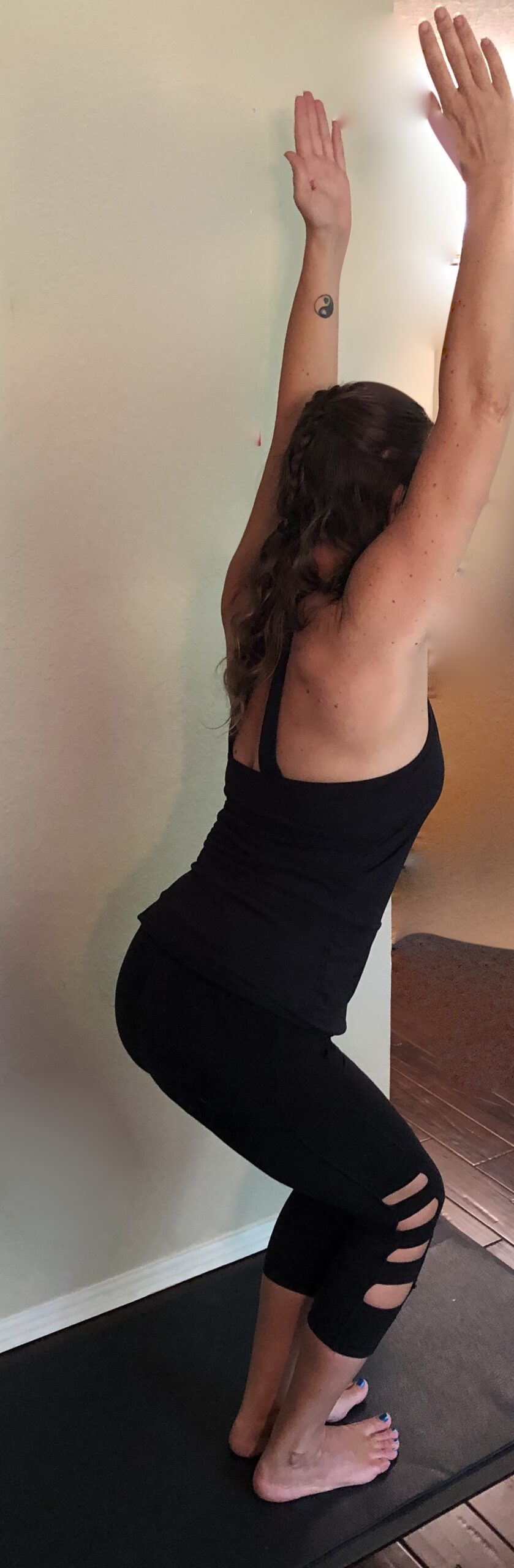
A standing strength posture that combines a gentle squat with an upright, lengthened torso.
Level: Beginner · Category: Standing · Support: See modifications below.
How to practice Chair Pose
1. Begin in Mountain Pose with your feet at a comfortable width.
2. Bend your knees and send your hips back as though approaching a chair. Keep contact through your whole feet.
3. Lift your arms only as high as is comfortable. Let the torso incline naturally without rounding or strongly arching the back.
4. Keep the knees tracking in the direction of the toes. Stay for a few easy breaths.
5. Press through your feet to stand, then lower your arms and release.
Breathing
Keep the breath smooth and unforced. Let an inhale create a sense of length and use the exhale to soften unnecessary effort. Shorten the hold or choose more support if breathing becomes strained.
Modifications and support
Use a real chair behind you, keep the squat shallow, or rest your hands on your hips. You do not need to bring the thighs parallel to the floor.
Common alignment habits to notice
Avoid gripping the toes, collapsing the knees inward, holding your breath, or lifting the shoulders toward the ears.
Benefits
Strengthens lower body muscles: inner thighs, glutes, hip flexors, quadriceps, calves
Tones ankles and arches of the feet
Improves posture and body alignment
Enhances core strength
Stimulates heart activity and supports detoxification
Increases circulation in legs and tones muscles
Emotional & Energetic Benefits
Activates the sacral chakra (energy center below the navel)
Builds mental stamina and focus through challenge
Encourages grounding and connection to inner creative energy
Cultivates balance between effort and surrender
Utkatasana invites you to find power in vulnerability, strengthening both body and spirit. As you chair yourself down, you create space for transformation—rooting into your strength while opening to the flow of your creative energy. This pose teaches the balance of challenge and ease, reminding you that true empowerment comes from within.
Check out Empowered Yoga Videos on YouTube!
Precautions
Reduce the bend for knee or hip discomfort. Use support for balance and seek advice if squatting causes pain.
Stay within a comfortable range. Stop for pain, dizziness, numbness, or unusual discomfort. If you have an injury, a health condition, or are pregnant, ask your healthcare professional and a qualified teacher about your individual needs.
Related yoga postures
Mountain Pose · Warrior II · Pose Home
Practice videos
Further reading: yoga effectiveness and safety.
By Tammie Mohn, Registered Yoga Teacher.