Entropy, Attention, and the Illusion of Stability
Entropy as a Universal Law
The term entropy means the natural tendency of energy to disperse, systems to loosen, and structures to decay unless something is actively organizing them.
Left alone, things do not hold their shape.
The universe is not failing. Entropy is simply operational law—a baseline condition.
Order requires maintenance.
And in human systems—lives, relationships, identities—order is not maintained by effort alone, nor by desire. What maintains order is coherent intention and sustained attention — working together over time.
Entropy in Lived Life
Entropy does not announce itself.
It works quietly.
A house left unattended does not collapse overnight. Instead:
- dust accumulates
- moisture seeps in
- materials weaken
- decay forms where no one is looking
From the outside, the structure may still appear intact.
Inside, it is already changing.
Human systems behave the same way.
Relationships, identities, and ways of living do not necessarily dissolve because something dramatic went wrong. They often dissolve because attention has shifted—or because the structure was never designed to carry what it was asked to hold.
Why Old Structures Are So Tempting
Old structures are appealing because they already exist.
This is true of houses and relationships, of identities and habits, of neural pathways in the brain and patterns held in the body.
They are familiar.
They have history.
And they spare us the uncertainty of beginning again.
Familiarity is efficient. Repetition requires less energy to maintain. In the nervous system, pathways that are already formed activate more easily than those that are not. In life, the same principle applies: existing structures—no matter how misaligned—demand less immediate effort than building something new.
A relationship that no longer fits, a role that has gone stale, a way of thinking that limits movement—each may feel easier to remain in than to dismantle. The mind knows the route. The body knows the posture. The expectations are already set.
Building something new requires exposure:
- clearing space
- tolerating incompletion
-
choosing without guarantees
It also requires the formation of new structures—neurologically, emotionally, and practically. Until they are reinforced, they feel unstable. Unproven. Uncertain.
Maintaining something old often feels easier, even when it produces quiet misery, because the system recognizes it. What is familiar is mistaken for what is safe. The known is mistaken for what is sustainable.
It is worth acknowledging that:
what requires continuous effort to stay intact is often already in entropy.
Effort becomes a substitute for coherence.
Maintenance replaces alignment.
Over time, the system confuses familiarity with truth—mistaking what has been reinforced through repetition for what can actually support life.
Intention, Attention, and Frequency
Intention and attention are often treated as interchangeable. They are not.
To begin with, intention establishes frequency.
It sets the tonal field—the level of coherence at which something is conceived.
Attention, by contrast, organizes energy.
It is the sustained placement of presence, time, and care within that field.
Attention amplifies the frequency established by intention.
It does not override it.
This distinction matters because entropy does not respond to desire.
It responds to structure.
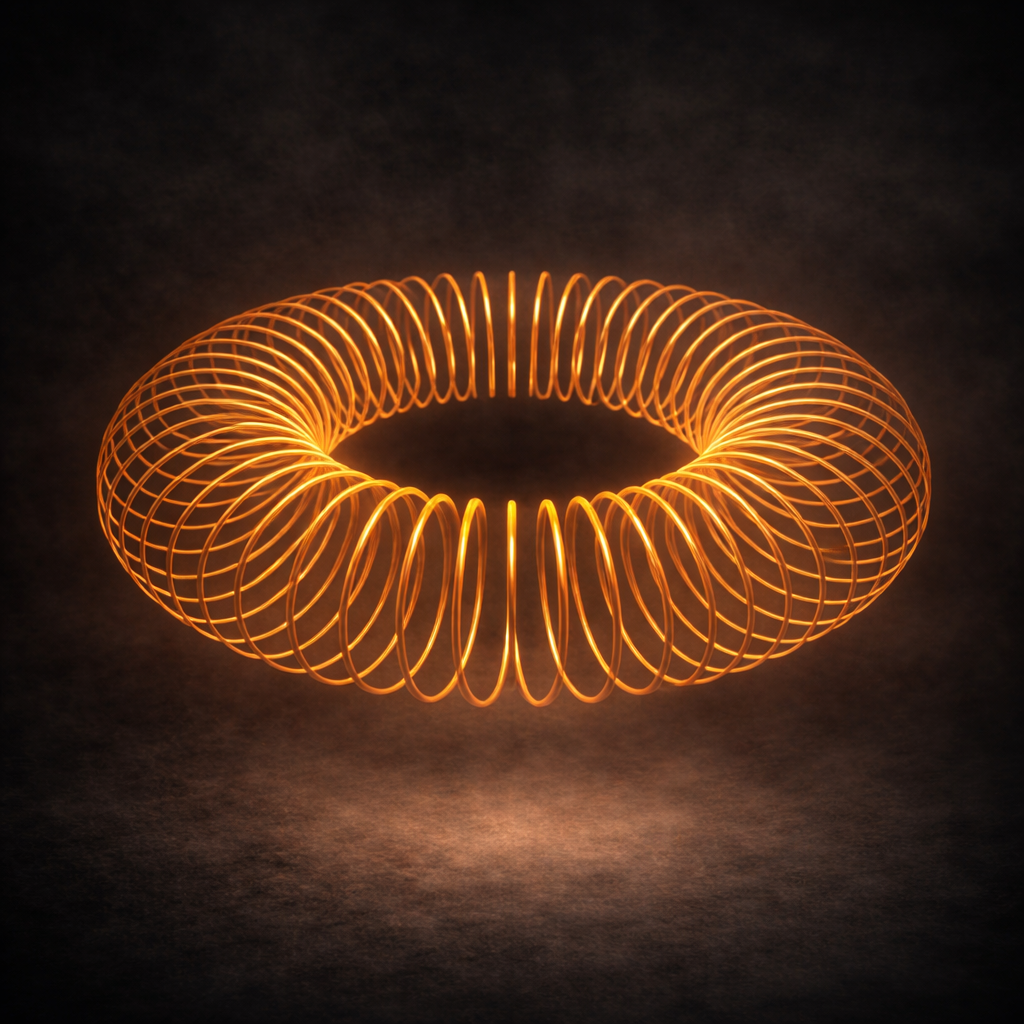
Sacred geometry makes this visible. Certain forms organize energy efficiently by design. The spiral, the torus, the Flower of Life—these are not symbolic choices. They are stable solutions that recur wherever energy circulates without resistance. Their coherence is intrinsic to their shape.
Copper demonstrates the same principle materially. It does not generate energy. It conducts it. When shaped intentionally, it allows movement without distortion—circulation without loss.
Together, geometry and material reveal a simple truth:
frequency is sustained by design, not by wanting.
A structure either supports the movement of energy, or it requires effort to compensate for what it cannot hold.
Structures manifest what they can carry through intention and sustained attention. Where structure and frequency are misaligned, entropy accelerates—regardless of desire.
When Structures Break
There is a cultural tendency to interpret collapse as failure.
But entropy does not destroy what is true.
It reveals what was never self-sustaining.
Entropy clears the space. Attention determines what takes form.
Some systems endure because they are built with coherence.
Others persist only through force, justification, or constant emotional labor.
One must use increasing effort to hold together what is no longer aligned, and in due course, over time, that effort becomes unsustainable. When attention finally withdraws, the structure fails—not as punishment, but as consequence.
This is not cruelty.
It is clarity.
Conscious Construction
Creation is not the act of resisting entropy.
It is the act of working with it deliberately.
Structures built with care—whether in relationship, work, or life—share common qualities:
- intention is clear and honest
- attention is precise, not scattered
- one chooses materials for integrity, not speed
- structures are not held together by pressure, illusion, or performance
Building in this way does not require constant explanation or repair.
Alignment holds.
This is the difference between living inside structures that demand maintenance
and living inside structures that quietly support coherence.
The Clearing
When attention withdraws from what no longer holds truth, entropy appears first as:
- silence
- dispersion
- emptiness
Withdrawing attention produces silence, dispersion, and emptiness, a state often mistaken for loss but signaling unassigned potential.
New structures require the clearing of what already stands. Entropy clears the space. Attention then chooses what comes next.
Closing
Entropy is not the enemy of meaning.
It is the mechanism that prevents false structures from lasting indefinitely.
What we build—in relationship, in work, in life—reveals whether we are organizing energy consciously or asking it to hold itself together through effort alone.
Coherence is not accidental.
It is chosen.